Small Gestures, Great Peace: The Story of a Thousand Cranes
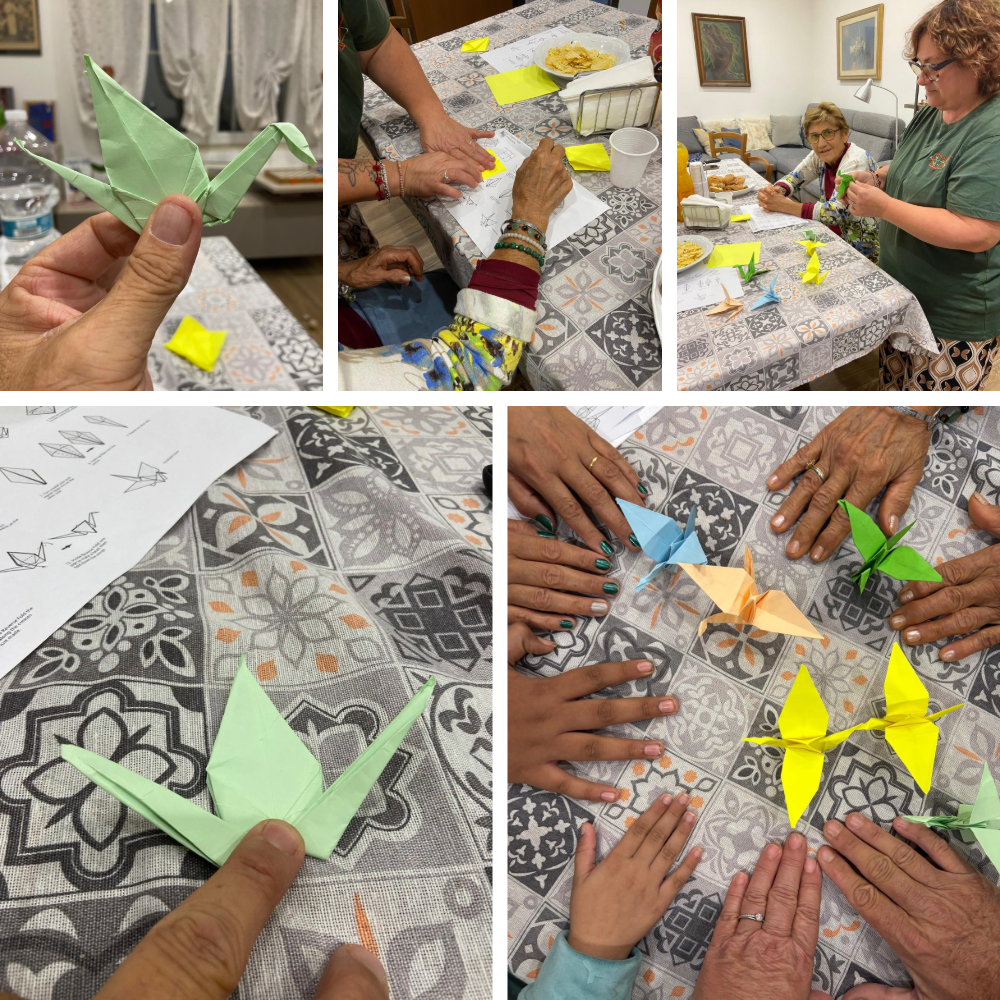
During one of the General Council’s visits to the NEANZ Province in Japan, our ambassador, Sheila, discovered a beautiful tradition that has become a symbol of home and world peace folding a thousand origami cranes. According to Japanese legend, anyone who folds a thousand paper cranes will have a wish granted, often associated with healing, hope, or peace.
This tradition is deeply connected to the story of Sadako Sasaki, a young girl who developed leukemia as a result of radiation exposure from the atomic bombing of Hiroshima. Hoping to recover, Sadako folded paper cranes, turning her personal struggle into a powerful symbol of hope. Although her life was tragically cut short, her story helped make the original crane a universal symbol of peace.
Inspired by this tradition, Sheila invited all the staff and sisters of the Community to take part in this meaningful initiative by setting aside time to fold paper cranes together with colleagues, family members, neighbors, and friends. This invitation became an opportunity not only to embrace a beautiful Japanese tradition but also to reflect on peace and how we can bring it into our everyday lives.
We enthusiastically welcomed this initiative, and one of our staff members, Sabina Severin, extended the invitation to children from an immigrant family in Italy. Their parents were so delighted by the idea that they, too, wanted to join in folding the cranes. Together, they spent an afternoon sharing thoughts and hopes for peace, creating a warm atmosphere of friendship and belonging, just like one big family. Through this simple activity, paper cranes became a bridge between people of different backgrounds, bringing hearts together and fostering integration.
The impact of this initiative extended beyond the time spent folding cranes together. We also received feedback from Fabrizio di Paolo, another member of our staff, who shared how these gatherings dedicated to peace had encouraged him to reflect on how much good we can do with very little. He explained that, on his journey home, he often finds himself caught in traffic, surrounded by frustrated, nervous people. In those moments, he recalls our conversations about peace and tries to put our message into practice. This helps him remain calm and avoid being swept up in the agitation around him. His experience reminds us that peace begins within each one of us and can be carried out in even the most ordinary moments of daily life.
We are grateful to Sheila for sharing this inspiring tradition and to Sabina for bringing so many hands and hearts together. Their initiative, along with Fabrizio’s testimony, reminds us that building a more peaceful and inclusive world does not always require grand gestures. Sometimes, it begins with a folded paper crane, an afternoon shared with others, or a conscious choice to respond to frustration with calm and understanding. Every small gesture matters, and together, these gestures can bring us one step closer to a world of peace and integration.
Related posts
Featured image